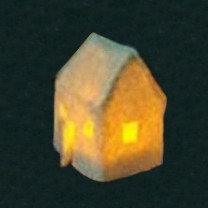
<< Everybody has a deep longing for the home but it has nothing to do with the physical home. The physical home has just become an object for a deep longing for The Home – it is just an excuse.
Because we don’t know the real home and we cling to it. This gives a sort of consolation, it makes one feel that one has a home. In fact, we don’t have any home on this earth.
The home exists not here – the home is somewhere inwards, very deep in the innermost core of your being, but to go there is a long journey >>
Osho, mysticus (in ‘Far Beyond the Stars’)
*****
<< If we don’t know how to listen to ourselves and to each other we are not going to go very far.
It is clear that you have to listen to yourself, your own suffering, your own aspirations […] and to the people in the communities, to their deepest desires, their suffering.
That kind of deep looking will bring about more understanding of self and of the community.
Understanding will make acceptance and tolerance and compassion possible.
With that kind of understanding and compassion possible, the quality of life in the community will improve.
You learn to look not with individual eyes, but with the community eyes. Because the collective insight is always deeper than individual insight. >>
Thich Nhat Hanh, zenmeester en boeddhistische monnik, Vietnam
*****
<< Dit is feitlik onmoontlik om die woord Ubuntu te vertaal. Alle Afrikatale het directe ekwivalente van hier die woord.
Die woord beteken liefde, goedhartigheid, onselfsugtigheid, genade, welwillendheid, respek, verdediging van ander mense se waardigheid – om maar net ’n paar van die moontlike betekenisse te noem.
Dit is slegs deur ubuntu te demonstreer dat ’n mens daarvoor kwalifiseer om umumtu te wees, ’n persoon, in die holistische sin van die woord.
Die hoogste betekenis van ubuntu lê daarin dat ons die onbeminlike liefhet: ’n vijand aan wie goedhartigheid, liefde en respek getoon word wat hy of sy nie verdien nie. >>
Uit een Afrikaans schoolbook, (geciteerd door Dick de Groot in ‘Ubuntu in de polder’, IsisQ5Magazine, 2006)
*****
<< Met het opdoemen van het nieuwe bewustzijn voelen sommige mensen zich geroepen om groepen te vormen die het verlichte bewustzijn verspreiden. Die groepen zullen geen collectieve ego’s zijn. De individuen waaruit die groepen bestaan hebben niet de behoefte hun identiteit door die groep te laten bepalen. […]
Maar voortdurende waakzaamheid is geboden omdat het ego eropuit is de macht te grijpen en zich met alle middelen te handhaven.
Het oplossen van het ego door het in het licht van het bewustzijn te brengen – dat wordt een van de belangrijkste doelen van deze groepen, of dat nu verlichte bedrijven, liefdadigheidsinstellingen, scholen of gemeenschappen van samenlevende mensen zijn.
Verlichte collectieven gaan een belangrijke functie vervullen in de opkomst van het nieuwe bewustzijn. >>
Eckhart Tolle, Spiritueel denker (uit: ‘Een nieuwe aarde’, AnkhHermes, 2005)
*****
<< Omdat ieder van ons uniek is, stimuleren mensen in Samenlevingen in Balans elkaar om boven alles trouw te zijn aan zichzelf.
Want alleen door trouw te zijn aan onze innerlijke motivatie is het mogelijk trouw te zijn aan onze zielenwens.
Wanneer ons Hogere Zelf de leiding heeft, weten we dat onze zielenwens ons unieke talent is.
Omdat men zich realiseert dat we allemaal onmisbaar en onvervangbaar zijn en dat dit unieke talent, deze unieke gave niet door iemand anders tot uitdrukking gebracht kan worden,
wordt ieder individu gerespecteerd voor zijn of haar unieke talent en bijdrage aan het geheel. >>
Marja de Vries, Biologe, ecologe, auteur van ‘De Hele Olifant in Beeld’ (uit: ‘Samenlevingen in Balans’, AnkhHermes, 2014)
*****
<< The new Story of the People, then, is a Story of Interbeing, of reunion.
In its personal expression, it proclaims our deep interdependency on other beings, not only for the sake of surviving but also even to exist. It knows that my being is more for your being.
In its collective expression, the new story says the same thing about humanity’s role on Earth and relationship to the rest of nature. It is this story that unites us across so many areas of activism and healing.
The more we act from it, the better able we are to create a world that reflects it. The more we act from Separation, the more we helplessly create more of that, too. >>
Charles Eisenstein, degrowth activist, auteur (uit: ‘The More Beautiful World Our Hearts Know is Possible’, 2013)
 Samenhuizen citaten